03 Dec 2025
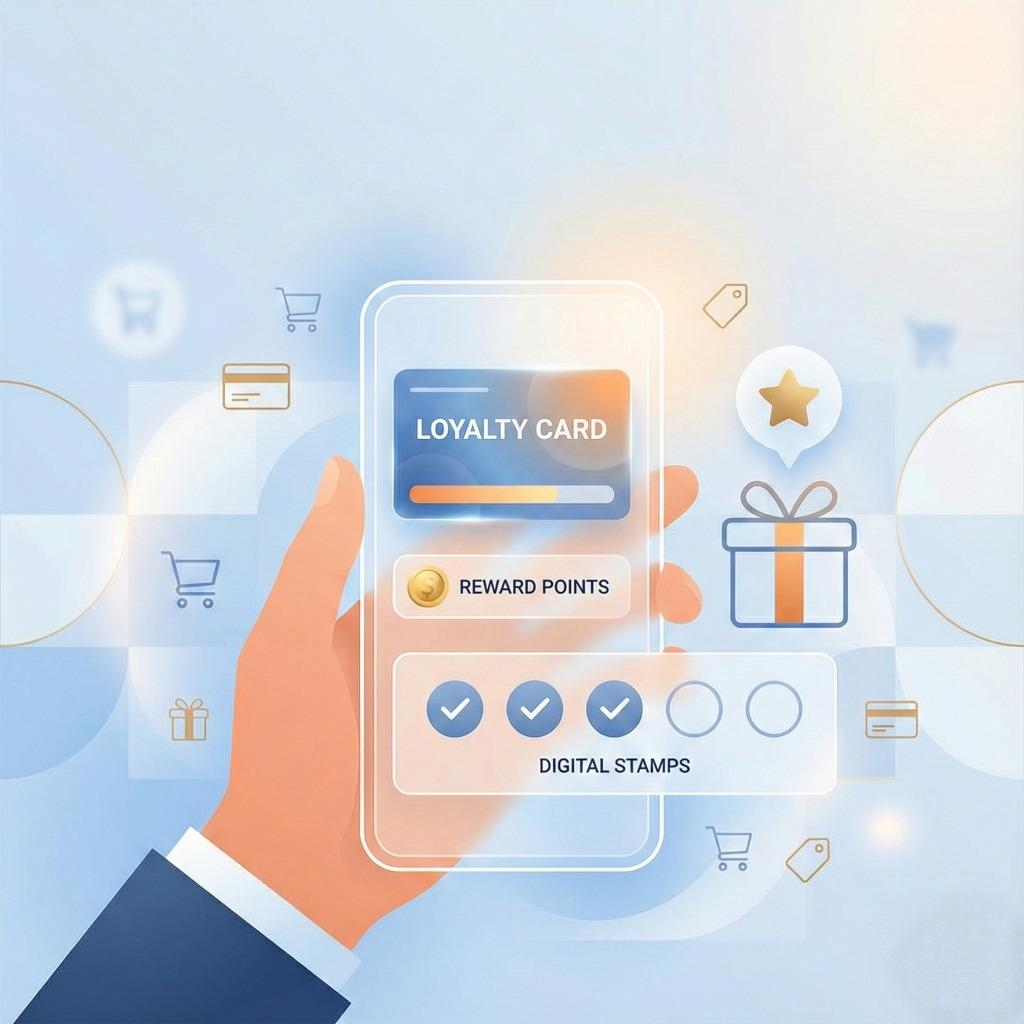
Building a loyal customer base is no longer optional for modern businesses; it is essential. With increasing competition and rapidly changing customer expectations, businesses need effective ways to keep customers engaged and coming back. A well-designed loyalty programme that uses digital tools, such as reward points, digital stamps and membership tracking, can provide this. Such systems transform one-time buyers into loyal patrons and dramatically improve long-term value for both customers and businesses.
In this blog post, we explore why customer loyalty reward points and digital stamp systems matter. We look at how they work, why they are more effective than traditional punch-cards or one-off discounts, and what makes a good digital loyalty system. Our aim is to give business owners, managers, and entrepreneurs a deep understanding of how loyalty schemes work, why they succeed, and what to consider when implementing them.
Customer loyalty programmes have been a staple of retail and service industries for decades. At their core, a loyalty programme rewards repeat business. Whenever a customer returns to a retailer, cafe, salon, or any service-based business, the programme gives them something in return—points, stamps, special offers, or VIP treatment. In return, businesses gain a stable base of repeat customers and deeper insight into customer behaviour.
In today’s digital age, loyalty programmes have evolved significantly. Digital loyalty platforms — those that replace traditional paper punch-cards or membership booklets — offer clear advantages. They simplify the process, reduce the chance of loss or misuse, and provide businesses with real-time data and analytics.
Digital loyalty programmes make it easier for customers to engage: there is no need to carry a physical card. Every purchase, stamp or point earned can be tracked through an app or a backend system. Digital record-keeping is more reliable and enables advanced features such as membership tiers, milestone rewards, free incentives and personalisation.
For businesses, the benefits are likewise significant. Loyalty programmes can significantly increase customer retention and reduce churn. Repeat customers are more likely to return regularly, spend more over time, and even advocate for the brand by referring friends or family.
These programs also increase customer lifetime value (CLV), which represents the total profit a business can expect from a customer over the entire relationship. By encouraging frequent visits and higher spend per visit, loyalty programmes can boost CLV over time.
Loyal customers also tend to make larger purchases than new customers. Over time, with the right incentives and tailored rewards, businesses can increase average order value and even reduce reliance on discount-based sales. This helps avoid competing on price alone.
Moreover, digital loyalty systems offer valuable data. Businesses gain insight into customer purchase patterns, preferences, and frequency. This data can inform targeted marketing campaigns, personalised offers, restocking schedules and strategic decisions for growth.
Finally, digital systems allow for more advanced loyalty strategies beyond simple stamp or point accumulation. For example, some businesses implement milestone rewards, membership tiers, or surprise gifts. These features encourage not only repeat visits but also increased engagement.
Given all these benefits, a well-designed digital loyalty programme is among the most effective tools a business can deploy to build long-term customer loyalty.
Not all loyalty programmes deliver results. The difference often lies in design — how simple, intuitive and flexible the system is, and how well it aligns with business goals and customer behaviour. A truly effective digital loyalty system shares several key traits.
First, simplicity is critical. Many customers quickly get disengaged if a loyalty scheme feels complicated. A system that offers stamps or points that are easy to earn and easy to redeem tends to perform better. Digital stamps often outperform points-only systems for smaller businesses because customers understand them instantly and see rewards more quickly.
Second, flexibility and adaptability matter. An effective loyalty system allows businesses to choose how they reward customers — whether via stamps, points, milestone rewards, or memberships. This flexibility enables the system to suit a wide range of businesses such as cafés, salons, restaurants, bars, retail stores, and start-ups.
Third, data visibility and insights are essential. Businesses must be able to view customers’ history, redemption patterns, frequency of purchases, and overall engagement. These insights allow for smarter customer segmentation and personalised offers that strengthen loyalty.
Fourth, integration with digital platforms increases convenience for customers. A mobile app or backend system that works seamlessly across devices gives customers real-time access to their rewards, history, membership status, and more. This convenience boosts usage and satisfaction.
Fifth, the ability to implement advanced loyalty and reward structures — like milestones, tiered memberships, or surprise incentives — greatly enhances long-term engagement. Rather than earning small rewards after every purchase, customers feel motivated to reach higher thresholds for bigger benefits.
Finally, a good digital loyalty system reduces administrative burden on the business. Instead of manually tracking paper cards or punch-cards, everything is managed automatically with backend tools, reducing errors and saving time. This makes it easier for businesses to scale loyalty programmes as they grow.
Digital loyalty systems are not limited to a single industry. They can be adapted by many types of businesses, from coffee shops and restaurants to salons, bars, retail stores, and boutiques. Because the system is flexible — supporting stamps, points, memberships, milestone rewards — it can align with different business models.
In a coffee shop, for example, a digital stamp system may replace old punch-cards. Customers simply scan via an app or show their digital card on the phone — no physical card needed. Over time they accumulate stamps, and after a set number of visits or purchases, they receive a free drink or a discount. This encourages frequent visits, and often leads to referrals from satisfied customers.
In a salon or barbershop, a loyalty points scheme can work really well. Clients can earn points for each service — haircut, treatment or product purchase — and redeem them for discounts, free add-ons, or freebies. Because salon and beauty customers often return regularly, points accumulate over time, creating a strong incentive to stick with the same establishment.
Restaurants and bars can use loyalty systems to convert occasional diners into regular patrons. They might reward customers for repeated visits, spending thresholds, or even referral of friends. Milestone rewards — for example, a free dessert after five visits, or a complimentary beverage after spending a certain amount — can be very effective.
Retail stores, boutiques and small shops benefit from digital loyalty programmes by boosting repeat visits, encouraging larger basket sizes, and collecting valuable data about customer preferences. This data-driven insight can guide inventory management, personalised offers, and tailored communication.
Start-ups and small businesses especially benefit as digital loyalty systems offer robust capability without heavy upfront investment. Because the system is digital and software-based, it can scale easily as the business grows, without the hassles of physical loyalty cards or manual tracking.
By implementing a flexible, well-designed digital loyalty system businesses across many sectors can improve customer retention, increase lifetime customer value, encourage repeat purchases and gain valuable data insights — all while reducing manual workload.
When considering adopting a loyalty system, business owners should keep several important criteria in mind.
First, choose a system that offers both stamps and points, or allows switching between them. The ideal loyalty solution should let you decide which reward mechanism suits your business model — whether you prefer the simplicity of stamps or the granular control of points and tiers.
Second, ensure the system includes a robust backend-panel. Backend control is vital for tracking customer behaviour, purchases, redemptions and memberships. It should also let you generate business reports and support tools such as inventory tracking, buying lists or sales analytics. This makes managing customer loyalty part of overall business operations.
Third, customers must have access to an easy-to-use app on their phones. A good loyalty solution should include mobile apps for Android and iOS so customers can track their reward points, stamps, full purchase history, membership status and redeem rewards at any time. Ease of use is critical for adoption.
Fourth, the system should accommodate different types of businesses — cafés, salons, bars, retail shops, restaurants — without needing heavy customisation. That kind of flexibility ensures the solution can adapt as your business evolves.
Fifth, documentation and support must be available. Especially for small businesses or start-ups that may not have dedicated IT teams, having professionally written, step-by-step documentation helps with installation and implementation. It reduces errors and ensures the system works smoothly from day one.
Lastly, pricing and long-term value. The loyalty solution should offer good value compared to the benefits it delivers. Because loyalty programmes pay off over time (through repeat visits, higher customer lifetime value and deeper engagement), the initial cost must be justified by long-term returns.
By keeping these criteria front and centre, business owners can choose a loyalty solution that matches their needs and delivers real benefit.
The shift from physical punch-cards to digital loyalty systems is not just a fad. It reflects a larger trend in how customers and businesses interact in the digital era. As technology advances and mobile-first behaviours become more common, digital loyalty systems are becoming a standard.
Mobile apps and digital wallets are now widely used and accepted. Instead of carrying multiple loyalty cards in a wallet or purse, customers prefer to have everything on their smartphone or seamlessly integrated into their mobile wallet. This convenience offers a frictionless experience and encourages more frequent use.
Digital loyalty also enables personalisation. Because the system records each customer’s history, spending habits and preferences, businesses can tailor offers, promotions and rewards to individual customers. This increases engagement, conversion rate and satisfaction.
Another trend is the evolution of loyalty beyond simple point-per-purchase schemes. Businesses increasingly offer milestone rewards, membership tiers, surprise gifts, and special events for loyal customers. These lead to deeper emotional connection and stronger brand loyalty rather than just transactional behaviour.
Data-driven loyalty programmes also allow businesses to better forecast demand, manage inventory and plan marketing campaigns. Over time, this helps streamline operations and improves efficiency.
At the same time, customers have grown to expect convenience, transparency and value. A digital loyalty system delivers all of these: no lost cards, no confusion, clear reward tracking and easy reward redemption.
As more businesses adopt digital loyalty, it is likely to become the norm — especially for any business that relies on repeat customers. For new businesses, investing in a digital loyalty solution from the start can provide a competitive edge.
One of the first questions many business owners ask is: “Are loyalty programmes really worth the investment?” The answer is usually yes, especially when the programme is built well, is easy to use and aligned with business goals. The cost of acquiring a new customer is often higher than maintaining an existing one. With loyalty programmes, businesses reduce churn, increase repeat visits and encourage higher spending — which often more than offsets the investment.
Another common question is: “Which works better — points-based or stamp-based systems?” The answer depends on the business type and customer behaviour. Stamp systems tend to be simpler and more immediate, which can lead to faster redemption and better engagement especially in smaller businesses or frequent-visit environments like cafés or salons. Points-based systems, on the other hand, allow for more flexibility, tiered memberships, and nuanced reward redemption — which may suit larger businesses or those with varied products and services.
A third question is: “How do we implement and manage a digital loyalty programme?” The best digital systems include a backend panel for business owners to manage customers, track points and stamps, monitor history, view reports, manage inventory or services and produce analytics. A mobile app for customers ensures smooth adoption and convenience. A well-documented installation and setup process makes implementation easier.
Finally, many ask: “Will customers adopt the system?” The answer depends on ease of use and perceived value. If customers find the system simple, rewarding and worth the effort, they will be more likely to engage with it. A seamless mobile experience and clear rewards usually result in high adoption and repeat usage.
In an increasingly competitive market, building long-term relationships with customers matters more than just making one-time sales. A digital loyalty system that offers customer loyalty reward points, digital stamps, memberships and milestone rewards is a powerful way to encourage repeat business, increase customer lifetime value, and gain valuable insights into customer behaviour.
Such systems benefit businesses across sectors — cafés, salons, restaurants, retail stores, bars, and startups. They offer flexibility, ease of use, data-driven insights and scalability. By choosing a loyalty solution that fits your business, you can transform occasional buyers into loyal patrons and build a foundation for sustainable growth.
For any business owner seeking growth, customer retention and long-term success, investing in a thoughtfully designed digital loyalty programme is a decision that pays off.