04 Dec 2025
In today’s competitive business landscape, winning a customer once is no longer enough. What truly matters is turning that one-time buyer into a loyal, repeat customer who keeps coming back. That is where a well-structured customer loyalty program comes in. For businesses ranging from coffee shops to salons to retail stores, a carefully designed loyalty system can become a powerful tool to build long-term relationships, increase revenue, and create brand advocates. In this article we will discuss how a modern digital loyalty solution — with features like reward points, digital stamps, store locator and full backend control — brings tangible benefits. If you are a small business owner, an aspiring entrepreneur or a manager evaluating loyalty systems, this post will give you clear, practical insights.
Loyalty is more than just repeat sales. A robust loyalty program helps businesses strengthen customer retention, nurture brand affinity and build long-term value. According to research on loyalty programmes, loyal customers tend to spend more over time. They are more likely to return, refer others, and engage with a brand beyond a single product or service.
When customers feel valued and recognised for their loyalty, they often become brand advocates. This leads to increased word-of-mouth recommendations — perhaps the most powerful marketing channel, because people tend to trust friends and family more than advertisements.
Moreover, retaining an existing customer is significantly more cost-effective than acquiring a new one. Running effective loyalty programmes reduces churn and reduces dependence on continuous customer acquisition efforts. Over time, this improves profitability, as loyal customers often deliver a higher Customer Lifetime Value (CLV).
In short, beyond just increasing immediate sales, loyalty programmes help brands build deeper relationships, create a stable customer base, and maximise long-term returns.
Traditional loyalty programmes often relied on paper punch cards or plastic membership cards. But in the modern digital age, such methods have several drawbacks: cards are easily lost, stamps are forgotten, tracking is clunky, and customers may drop off simply out of convenience or friction.
Digital loyalty solutions solve many of these issues. They store reward points and stamps directly in a mobile app. They enable smooth tracking of customer purchases, visits, and reward redemptions. For the business owner, they offer a backend admin panel to manage stores, view reports, and control inventory or promotions. For the customer, they deliver convenience, transparency, and engagement. Such digital programmes reduce waste, eliminate the need for physical materials, and support personalised experiences that modern consumers expect.
A digital loyalty platform also means scalability. Whether you run a single coffee shop or a chain of salons, you can deploy the same loyalty system across all branches. As your business grows, digital loyalty infrastructure grows with you.
Modern loyalty solutions typically combine multiple features: reward points, digital stamps, membership levels, free incentives, and store locators. When a customer makes a purchase or visits a store, the system credits them points or stamps. Over time, these accumulate toward rewards — discounts, freebies, member-only perks, or milestone incentives.
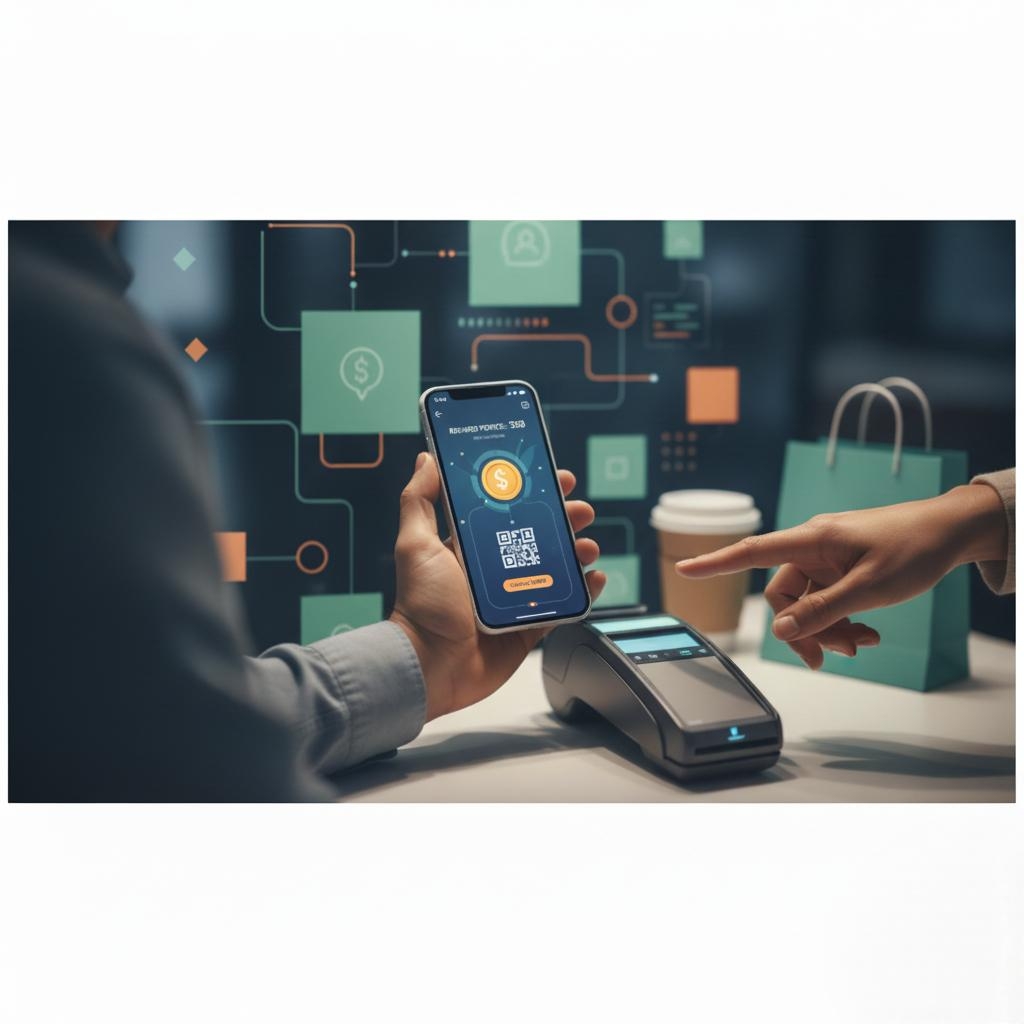
Some systems even integrate with a store’s POS (point of sale) to automatically issue or redeem points via QR codes. This removes manual effort and ensures accuracy. The business dashboard — or backend admin panel — enables store owners to view transaction history, monitor loyalty usage, manage store listings (especially in a multi-store setup), track inventory, run promotions, and generate useful business reports.
For the customer, everything becomes more seamless. They no longer need to carry a physical card. Their purchase history, reward balance, and redemption options are visible in their app. They can also locate nearby participating stores using a built-in store locator, which enhances convenience and improves their overall brand experience.
This combination of transparent reward tracking, convenience, and full control for business owners creates a loyalty solution that is far superior to outdated punch-card systems.
If you are a business owner evaluating whether to adopt a digital loyalty app, there are clear advantages to consider:
First, increased customer retention. By offering points and rewards for repeat purchases, customers have an incentive to return. This not only improves frequency of visits but also builds long-term customer relationships.
Second, higher Customer Lifetime Value (CLV). Loyal customers tend to spend more and in more frequent intervals. As they accumulate points or stamps, they are more likely to upgrade to higher membership tiers or redeem valuable rewards — which effectively increases their lifetime spend with your business.
Third, differentiation and competitive advantage. In many niches — coffee shops, salons, small retailers — the difference between two competing businesses can be narrow. A robust loyalty programme adds value beyond product or service alone. It creates a better customer experience and builds brand affinity, making your business stand out.
Fourth, marketing and referral potential. Satisfied loyal customers are more likely to recommend your business to others. Loyalty programmes can leverage that by offering referral bonuses or incentives for spreading the word. This effectively turns your customers into advocates and reduces marketing costs.
Fifth, insightful data and analytics. A digital loyalty platform logs customer behaviour — purchases, visits, reward redemptions, frequency — giving you rich data about your clientele. This helps you tailor promotions, understand trends, customise rewards, and optimise business operations. Over time, that data becomes a powerful tool in shaping customer experience and boosting profitability.
Overall, adopting a digital loyalty system is not just a tool for retention, but a strategic business decision that can fuel growth, build brand loyalty, and maximise long-term value.
If you are researching loyalty solutions, there are certain features and qualities that separate an effective system from a forgettable one. First, flexibility. The system should support multiple reward mechanisms such as points, digital stamps, milestone rewards and tiered membership. This enables you to design rewards that match your customer behaviour and business model.
Second, ease of use for both customers and business owners. Customers should be able to earn and redeem rewards easily through an app. Business owners should have a robust backend to manage stores, track usage, monitor inventory, generate reports, and manage promotions without technical hassle. A system with full documentation, easy installation and compatibility across platforms ensures smooth operation.
Third, scalability. As your business grows or adds multiple locations, it should remain easy to manage all stores under a unified system. A store locator feature helps customers find the nearest outlet and increases convenience.
Fourth, transparency and clarity. Customers need to see their points, history and rewards clearly, which builds trust. Complicated systems or too many hidden rules can discourage participation. A simple, intuitive user experience increases adoption and keeps customers engaged.
Fifth, support and reliability. Good customer support, clear documentation, and reliable performance (on both front-end and backend) are essential. If technical issues disturb the user experience or business workflow, the loyalty programme becomes more burden than benefit.
By evaluating loyalty solutions against these criteria, you ensure that you choose a system that will actually deliver long-term value rather than just a short-term novelty.
Small businesses, coffee shops, salons, boutiques and startups often operate with limited marketing budgets and resources. They may not have the scale or reach of large retailers, but what they do have is the ability to create personal relationships with customers. A loyalty app gives them a way to amplify that advantage.
By offering reward points, digital stamps, membership perks and free incentives, these businesses can create a sense of belonging for customers. When done right, a loyalty programme turns casual visitors into repeat buyers and even brand ambassadors. For a small café, a loyal customer who visits weekly and orders frequently can easily outweigh the value of multiple one-time customers.
Because loyalty apps are often much cheaper than heavy marketing campaigns, they offer high return on investment for small or new businesses. They also give access to data and insights that big companies rely on, helping small businesses make informed decisions.
Moreover, the convenience and digital nature of mobile apps align with customer behaviour in this digital age. People increasingly prefer using their smartphone to manage everything — including loyalty rewards. This makes a digital loyalty system more relevant and appealing than ever.
Finally, the sense of exclusivity and reward creates emotional connection. When customers feel like members of a community rather than anonymous buyers, they develop affinity — and that loyalty goes beyond price or product.
A loyalty system alone does not guarantee success. How you implement and maintain it matters. First, the rewards must be desirable and easy to understand. If customers find the structure confusing or the rewards irrelevant, they are unlikely to engage. Offering a mix of instant rewards (like a small discount or freebie) and long-term incentives (like milestone perks or tier upgrades) tends to work best.
Second, make enrollment and redemption as easy as possible. A frictionless user experience — ideally via a minimal-hassle mobile app — encourages participation. Customers should be able to check points, redeem rewards and find store locations without hurdles or confusion.
Third, communicate and engage. Remind customers of their reward balances, highlight special promotions or limited-time offers, and provide personalised incentives based on their history. This keeps the loyalty programme top of mind rather than a forgotten afterthought.
Fourth, use data intelligently. Analyse which rewards or promotions drive the most engagement. Monitor customer segments, purchase frequency, redemption rates and feedback. Use these insights to refine reward structures, tailor offers and improve overall customer experience. This turns the loyalty programme from a static reward system into a dynamic growth tool.
Fifth, treat loyalty as a relationship rather than a transaction. Show customers that you value them not just for their purchases but as people. Personal touches — such as birthday rewards, surprise bonuses, or recognition for long-term loyalty — help build emotional bonds. Over time this creates brand advocates rather than just repeat customers.
When a business chooses a comprehensive digital loyalty solution — one that includes customer apps (for iOS and Android), a full backend admin panel, digital stamps or point-based rewards, store locator, and membership / incentive features — they gain much more than a simple rewards system.
Such a solution becomes an integrated growth engine. It supports customer retention, improves brand loyalty, enables data-driven marketing, reduces overhead compared to physical loyalty cards, and scales effortlessly with growth. For businesses like cafés, salons, bars, retail shops, small chains and startups, this means unlocking potential that was previously accessible only to large retailers.
In addition, having all elements under one solution — from front-end user experience to robust backend management — ensures consistency, reliability, and ease of use. It reduces technical friction, support overhead and maintenance burden. For business owners, that translates to more time to focus on core operations rather than managing loyalty logistics.
Overall, a complete loyalty solution can become a strategic asset rather than just a marketing tool.
As consumer expectations evolve and competition intensifies, loyalty will no longer be a “nice to have” feature — it will become a necessity. Digital loyalty programmes that combine reward points, stamps, store locators, membership perks and backend analytics will increasingly define which businesses thrive and which lag behind.
In the coming years, we expect loyalty solutions to grow beyond simple points and stamps. Features like dynamic rewards based on customer behaviour, personalised incentives, referral and community features, and data-driven marketing integration will become standard. Businesses that embrace these features early will have a competitive edge.
For small businesses and startups, having access to such comprehensive loyalty systems levels the playing field. With the right approach — clarity, flexibility, and customer-focused value — they can build loyal customer bases that rival large brands.
If you are exploring loyalty systems for your business, it is worth considering one that offers full control, flexibility and an entire ecosystem — from mobile apps to backend analytics. In a world where customer retention matters more than ever, such tools are a smart investment.